Strategic Asset Management: A Key Driver of Energy Efficiency

The Untapped Energy Opportunity
Energy efficiency isn't just about turning off the lights when you leave a room. In the mining industry, asset management is the key to driving energy efficiency—not just through better equipment selection but through precision operation and maintenance practices that eliminate energy waste at the source.
According to the US DOE Bandwidth Study on the Mining Industry, today's operations consume 100% of their current energy baseline. But here's the kicker: 21% of that energy is waste that can be eliminated with best practices in asset management.
By applying proactive and precision maintenance techniques, we can reduce consumption to 79% or lower, cutting costs and improving sustainability in one shot. With advanced R&D, that number can drop to 59%—the practical minimum.
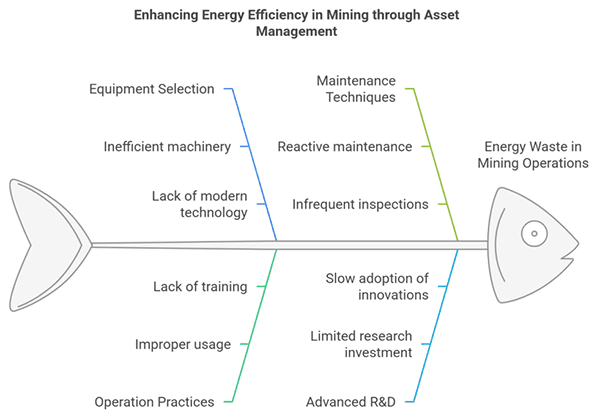
This is not unique to mining. The DOE has conducted Bandwidth Studies across multiple industries, including petrochemicals, pulp and paper, steel, aluminum, and food processing. These studies provide publicly available benchmarks that show how much energy is currently consumed, what can be saved with best practices, and what further reductions are possible with advanced technology.
Energy Savings Directly Impact Profitability and Carbon Footprint
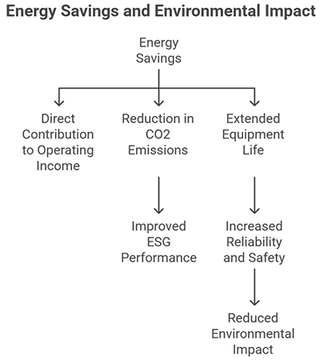
One of the most significant benefits of energy savings is that they go directly to the operating profit line—there's no cost of goods sold (COGS) to absorb. Every kilowatt-hour (kWh) saved is a direct contribution to operating income.
Every kilowatt-hour saved is a direct contribution to operating income.
Moreover, energy efficiency directly affects a firm's carbon footprint. A general rule of thumb is that every one kWh-equivalent of energy consumption produces approximately 0.707 kg of CO2-equivalent emissions. By cutting energy waste, businesses don't just save money—they also improve their ESG performance and reduce lifecycle environmental impacts.
As I frequently say, As an engineer, my job is to effectively and efficiently ensure that energy is converted from one form to another and effectively and efficiently transferred along intended pathways to accomplish the desired work. Any deviations produce inefficiencies and lead to increased wear and tear on the equipment.
By managing energy effectively, we also extend equipment life, which increases reliability and safety and reduces the overall lifecycle environmental impact of physical assets.
Let's break it down.
Why Does Asset Management Matter for Energy Efficiency?
The mining industry operates some of the most energy-intensive equipment on the planet—from massive haul trucks to crushing and grinding operations that consume vast amounts of electrical and mechanical power. However, most operations unknowingly waste energy due to misalignment, imbalance, friction, and inefficiencies built into daily processes.
Here's the reality:
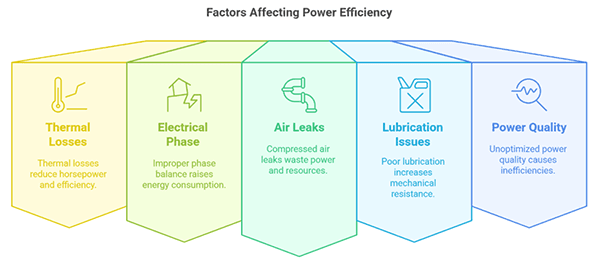
Thermal losses, misalignment, and friction rob horsepower.
Improper electrical phase balance increases energy demand.
Compressed air leaks and pressure losses drain power.
Poor lubrication leads to increased mechanical resistance.
Unoptimized power quality leads to harmonic losses and inefficiencies.
You reduce maintenance costs and drive bottom-line energy savings by tackling these issues with best-in-class asset management.
Key Strategies to Reduce Energy Waste
Let's get tactical. Here are the top asset management practices that drive energy efficiency in mining and heavy industry:
Proper and Lean Operation
Why? Equipment that operates at optimal parameters consumes less energy and lasts longer.
How? Implement standardized operating procedures (SOPs) based on equipment design specifications.
Impact: Cuts down on unnecessary energy draw and premature wear.
Minimize Idling
Why? Idling consumes fuel and electricity without producing output.
How? Use automated shutdown systems and real-time operator feedback.
Impact: Reduces fuel consumption and maintenance downtime.
Fuel-Efficient Operation & Tuned Combustion Management
Why? Optimizing fuel burn increases efficiency and reduces emissions.
How? Train operators in eco-driving techniques, leverage real-time fuel monitoring, implement tuned combustion management for optimal air-fuel ratios, and eliminate unnecessary load cycles.
Impact: Direct fuel savings, lower emissions, and longer engine life.
Minimize Thermal Losses
Why? Uncontrolled heat is wasted energy.
How? Improve insulation, heat recovery, and cooling system efficiency.
Impact: Reduces excess energy consumption for heating and cooling systems.
Correct Tire Pressure Management
Why? Improper tire pressure increases rolling resistance, which burns more fuel.
How? Implement automated tire pressure monitoring (TPMS) and scheduled checks.
Impact: Reduces fuel consumption and extends tire life.
Mechanical Alignment
Why? Misalignment in shafts, conveyors, and gear trains creates energy loss and premature failures.
How? Conduct precision laser alignment during maintenance.
Impact: Reduces power losses and increases mechanical efficiency.
Mechanical Balance
Why? Imbalance in rotating equipment causes unnecessary resistance and vibration.
How? Use dynamic balancing and real-time vibration monitoring.
Impact: Reduces power demand and increases equipment lifespan.
Precision Fastening and Looseness Management
Why? Loose bolts and improper torques lead to energy inefficiencies and mechanical failures.
How? Implement a precision fastening program using calibrated tools.
Impact: Reduces excessive friction and misalignment-related energy losses.
Effective Lubrication and Friction Management
Why? Friction consumes energy and accelerates wear.
How? Use condition-based lubrication and high-quality synthetic lubricants.
Impact: Reduces friction losses and lowers energy consumption.
Power Quality Management
Why? Poor power quality causes excess heating, wasted energy, and system inefficiencies.
How? Implement power factor correction, voltage optimization, and harmonic filtering.
Impact: Reduces excess power draw and improves system performance.
Harmonics Management
Why? Harmonic distortion wastes power and stresses electrical components.
How? Use harmonic filters and phase synchronization techniques.
Impact: Optimizes power usage and prevents overheating in electrical systems.
Electrical Circuit Quality
Why? Poor wiring, loose connections, and faulty components create resistance and energy loss.
How? Implement routine infrared thermography and electrical inspections.
Impact: Prevents wasted energy and reduces the risk of electrical failures.
Energy Efficiency Starts with Asset Management
Reducing energy waste isn't about significant capital investments but applying the right asset management strategies. The US DOE study proves that with proper operational and maintenance practices, 21% of energy waste is avoidable right now. With the right R&D, we can push that even further.
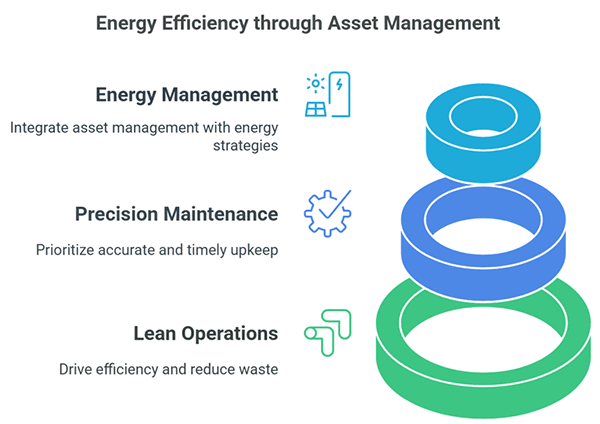
Asset management IS energy management—run equipment right from the start.
The key takeaway for mining operations, metal plants, and heavy industry is simple: Asset management IS energy management. Drive lean operations, eliminate inefficiencies, and prioritize precision maintenance, and you'll not only cut energy costs—you'll build a more sustainable, more profitable operation.
To understand how your industry compares, review the DOE Bandwidth Studies available for sectors like steel, aluminum, food processing, and more. These reports provide a roadmap for energy reduction and operational excellence.
Want better efficiency? Don't just fix things when they break—run them right from the start.