CMRP Exam Advice Backed by Experts and the SMRP Framework
The CMRP is the only certification program of its kind accredited by the American National Standards Institute (ANSI), which follows the globally recognized ISO standards for its accreditation purposes. The test thoroughly examines a broad scope of expertise measured against the universal standard.
“If a step in a process is skipped or performed at a substandard level, it creates defects known as failures.” - Ron Thomas, Former Engineering/Maintenance Manager Dofasco Steel
One must have “Knowledge” concerning the following:
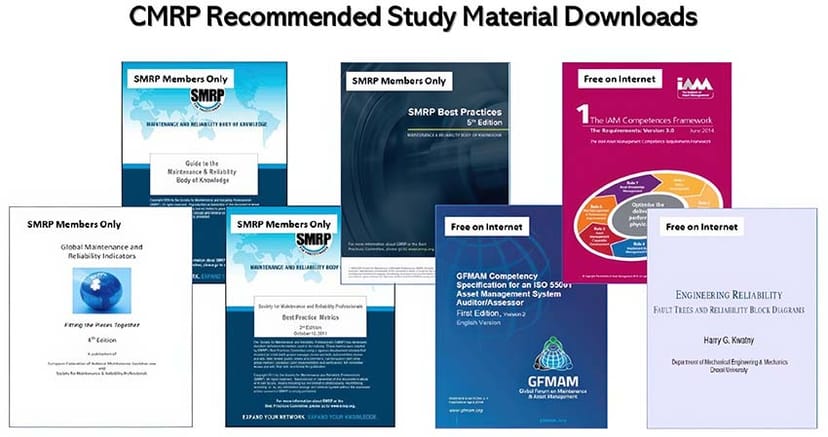
Known Maintenance and Reliability Best Practices
SMRP Body of Knowledge
SMRP Metrics Definitions
SMRP Best Practices
SMRP Global Maintenance and Reliability Indicators
GFMAM Asset Management Landscape
IAM Competency Framework
Engineering Reliability Fault Trees and Reliability Block Diagrams by Harry G. Kwatny
ADKAR (Book) A Model for Change in Business, Government, and Our Community
Recommendations
Step 1 – Join SMRP (https://smrp.org)
Step 2 – Join one of the SMRP Chapters or Special Interest Groups and Participate, meet others and learn from each other
Step 3 – Purchase and Study “Maintenance Best Practices” by Ramesh Gulati and “Rules of Thumb for Maintenance and Reliability Engineers” by Ricky Smith and Keith Mobley, ADKAR- a MODEL FOR CHANGE
Step 4 – Take training in “SMRP Body of Knowledge” (not a requirement)
Step 5 – Download and Study the following from SMRP Website as a member. (SMRP Body of Knowledge, SMRP Metrics, and SMRP Best Practices, Global Maintenance and Reliability Indicators)
Step 6 – Take the practice exam in “Maintenance Best Practices” by Ramesh Gulati, you may not see any of these questions on the exam however it will help you understand how the questions are asked, great practice. Each question is linked to a page in this book to study.
Study the SMRP Body of Knowledge (5 Pillars)
Pillar 1: Business & Management
This subject area describes the skills used to translate an organization’s business goals into appropriate maintenance and reliability goals that support and contribute to the organization’s business results.
Pillar 2: Manufacturing Process Reliability
This subject area relates maintenance and reliability activities to the organization's manufacturing process to ensure that they improve the manufacturing process.
Pillar 3: Equipment Reliability
This subject area describes two activities that apply to the equipment and processes for which the maintenance and reliability professional is accountable. First, are those activities used to assess the current capabilities of the equipment and processes in terms of reliability, availability, maintainability, and criticality. Second, are the activities used to select and apply the most appropriate maintenance practices so that the equipment and processes continue to deliver their intended capabilities most safely and cost-effectively.
Pillar 4: Organization & Leadership
This subject area describes processes for assuring that the maintenance and reliability staff is the most qualified and best assigned to achieve the maintenance and reliability organization goals.
Pillar 5: Work Management
This subject area focuses on the skills used to perform maintenance and reliability work. It includes scheduling and planning activities, quality assurance of maintenance activities, stores, and inventory management.
Think about how you could use the 5 Pillars to Optimize/Reshape your current Maintenance and Reliability organization.
Study SMRP Metrics
Review the definitions of each metric and consider how these metrics could be used to optimize one's current metrics.
The SMRP Metrics allow the maintenance and reliability professional to measure performance consistently, make valid comparisons, establish achievable goals and objectives, and set realistic expectations. Standardizing how our maintenance and reliability practices are measured forms the foundation for these goals.
Remember this:
Leading Metrics lead to results
Lagging Metrics are the results
Study SMRP Best Practices
SMRP Best Practices is a comprehensive publication of world-class metrics, guidelines, and a glossary of terms for the maintenance, reliability, and physical asset management profession.
This publication is designed to help practitioners run safe, cost-efficient, and effective maintenance and reliability programs that align with an organization's strategic, operational, and tactical best practices.
The 70+ metrics and guidelines in this new edition provide standardization and benchmarks to measure the success of maintenance and reliability programs.
Each metric is broken down by definition, objective(s), formula, component definitions, and qualifications and includes a sample calculation, best-in-class target values, cautions, and notes for harmonization. The guidelines provide additional information and further clarification of component terms used in SMRP's metrics.
On the Day Before the CMRP Exam
Things to Do
Minimize alcohol intake.
Study 2-4 hours every other day using the material recommended above
Study – take a 30-minute break every hour, walk around outside, and clear your head; no TV while studying.
Study with someone else is good.
Get plenty of uninterrupted sleep (minimum of 6 hours)
Things Not to Do
Purchase an APP with CMRP Questions, NEVER Works
Purchase a CMRP Study Book, wasting your time.
Frequently Asked Questions
How do I prepare for the CMRP exam?
Start by downloading and studying the SMRP Body of Knowledge, SMRP Metrics, and SMRP Best Practices from the SMRP website (membership required). Study 'Maintenance Best Practices' by Ramesh Gulati and 'Rules of Thumb for Maintenance and Reliability Engineers' by Ricky Smith and Keith Mobley. Take the practice exam in Gulati's book — you may not see those exact questions but it helps you understand how questions are structured. Consider taking SMRP Body of Knowledge training, though it's not required. Focus on understanding the five pillars and how SMRP metrics are used to measure and improve maintenance and reliability performance.
What are the SMRP 5 Pillars of maintenance and reliability?
The SMRP Body of Knowledge is organized around five pillars. Pillar 1 covers Business and Management — translating business goals into maintenance and reliability objectives. Pillar 2 covers Manufacturing Process Reliability — relating maintenance activities to the manufacturing process. Pillar 3 covers Equipment Reliability — assessing current equipment capabilities and selecting appropriate maintenance practices. Pillar 4 covers Organization and Leadership — ensuring maintenance staff is qualified and properly assigned. Pillar 5 covers Work Management — the skills used to perform maintenance work including planning, scheduling, quality assurance, and inventory management.
What is the CMRP certification?
The Certified Maintenance and Reliability Professional (CMRP) is a certification offered by the Society for Maintenance and Reliability Professionals (SMRP). It validates knowledge across maintenance management, reliability engineering, equipment reliability, work management, and organizational leadership as defined by the SMRP Body of Knowledge. The CMRP is one of the most widely recognized credentials in the maintenance and reliability profession and is often required or preferred for reliability engineering and maintenance management positions.
What study resources are recommended for the CMRP exam?
Key study resources include the SMRP Body of Knowledge (download from SMRP website with membership), SMRP Metrics and SMRP Best Practices publications, 'Maintenance Best Practices' by Ramesh Gulati (includes a practice exam with page references for studying), 'Rules of Thumb for Maintenance and Reliability Engineers' by Ricky Smith and Keith Mobley, the ADKAR model for change management, and the Global Maintenance and Reliability Indicators publication from SMRP. Optional but recommended: formal SMRP Body of Knowledge training from an approved provider.
What topics does the CMRP exam cover?
The CMRP exam covers the five SMRP pillars: Business and Management (aligning maintenance goals with business results), Manufacturing Process Reliability (connecting maintenance to production outcomes), Equipment Reliability (assessing asset condition, selecting maintenance strategies including RCM, FMEA, and criticality analysis), Organization and Leadership (workforce qualification, training, and organizational structure), and Work Management (planning and scheduling, quality assurance, stores and inventory management). The exam tests practical application of these concepts, not just theoretical knowledge.